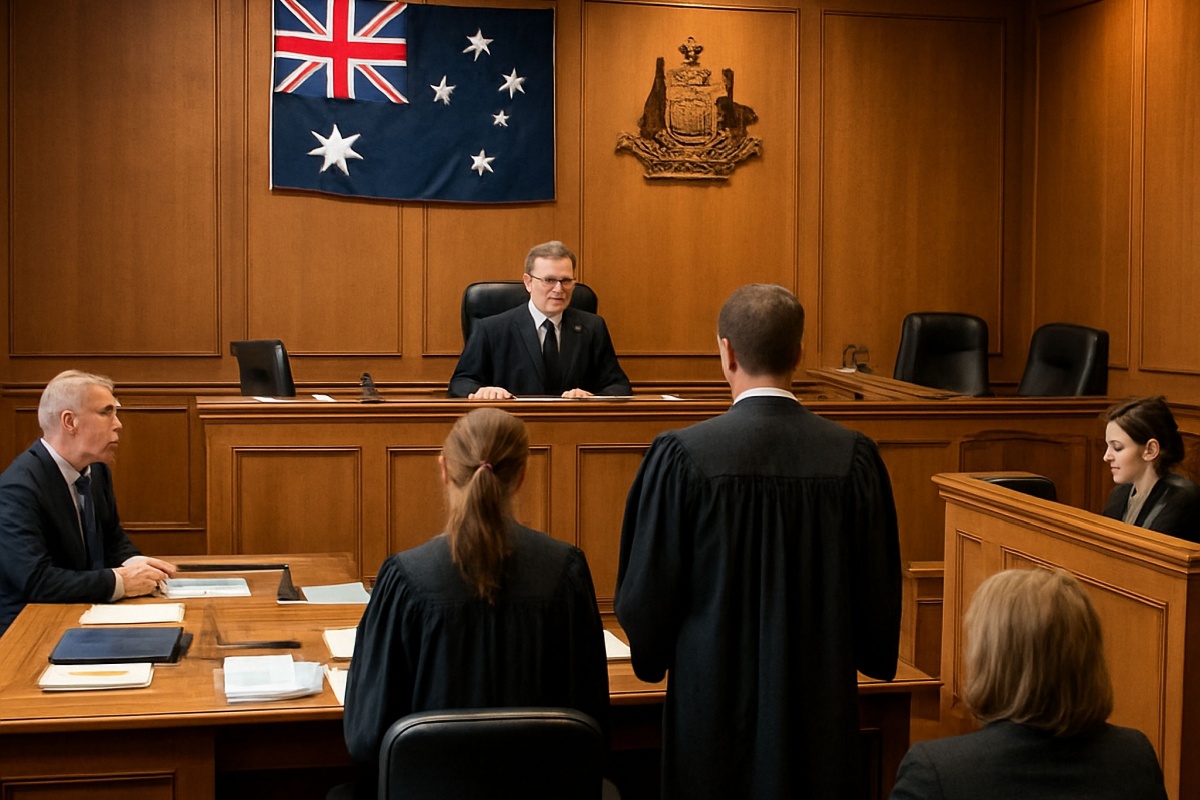
On 21 August 2026, the NSW Court of Criminal Appeal quashed the convictions of George Alex and his co-accused and ordered a new trial. The convictions followed a five-month Supreme Court trial and five weeks of jury deliberations, and concerned an alleged conspiracy to defraud the Commonwealth of more than $10 million.
The Court found the trial had been affected by an accumulation of juror irregularities, and described the tampering allegation raised from within the jury as unprecedented. So what has actually changed as a result of this decision, and what has not?
What the Court Found
Three months into the trial, federal police raided the home of the jury foreman during an unrelated drug investigation. They found he had been conducting extensive internet searches about one of the accused, and that he had been selling drugs to another juror.
The foreman had also raised information from those searches with the rest of the jury. In his own account to the Sheriff, he described introducing topics in order to provoke a reaction from other jurors. He then alleged that jurors had been offered money to return not guilty verdicts. The second juror was found to have a high school connection to one of the defence solicitors.
Both jurors were discharged. Because the trial had begun with spare jurors owing to its expected length, it was able to continue, and the trial judge rejected an application to discharge the entire jury. The remaining jurors returned guilty verdicts.
The Court of Criminal Appeal held that the accumulation of the searches, the tampering allegation and the undisclosed connection amounted to a fundamental error or irregularity, and a substantial miscarriage of justice.
The Test the Court Applied
The question was not whether the jury was in fact biased. It was whether a fair-minded and informed member of the public, knowing everything that had occurred, might reasonably apprehend that the jury would not decide the case according to law.
Two features weighed heavily. The first was the material the foreman had located, which had never been admitted into evidence and which the accused had no opportunity to answer. The second was the position the remaining jurors were placed in. They were interviewed by Sheriff’s officers, cautioned about their right to silence, and informed that their own conduct was being investigated as possible criminal conduct. The defence argued on appeal that jurors in that position may have felt pressure to convict, in order to dispel any suspicion that they had been corrupted.
Quashed Is Not Acquitted
A quashed conviction is not a finding of innocence, nor is it an acquittal. It is a finding that the trial miscarried. The convictions and sentences are set aside; the presumption of innocence applies in full, and the charges are returned for determination at a new trial. The accused are on bail and will return to court next month to set a new trial date.
Why the Directions Exist
Under section 68C of the Jury Act 1977 (NSW), it is an offence for a juror to make inquiries about the accused, or about any matter relevant to the trial, outside the proper exercise of their functions. The maximum penalty is 50 penalty units, two years’ imprisonment, or both. Section 53A allows a court to discharge a juror for misconduct or for conduct giving rise to a risk of a substantial miscarriage of justice; section 55DA allows a judge to examine a juror on oath; and section 75C provides a route for jurors to report irregularities.
Those provisions exist for a single reason. A verdict must rest only on evidence admitted at trial and tested in open court. Material located online has not been tested, is frequently inadmissible for sound reasons, and cannot be answered by the accused. A juror who has absorbed it is considerably more likely to accept the Crown case.
What It Means More Broadly
For anyone summoned for jury service, the directions are legal obligations rather than advice. Searching for information about an accused person is a criminal offence, and a juror who becomes aware of an irregularity has a statutory means of reporting it.
For anyone convicted after a trial, an irregularity discovered after verdict can form the basis of a conviction appeal, but the merits of that appeal depend on the conduct of the trial, on what was raised at the time, and on whether the irregularity was capable of being cured. It is not a general opportunity to re-run the trial.
If you have been convicted and consider your trial was affected by an irregularity, or you are facing fraud or other serious charges, the position turns entirely on the record in your matter — speak to our team today.