Two Novocastrians made national headlines after footage emerged of them cruising along a busy intersection on motorised chairs.
Witnesses reported that the innovative duo stuck to the footpath and obeyed traffic signals.
While the pair have received praise on social media for their ingenuity, their story raises an interesting question – could they be liable for traffic offences?
What is classed as a vehicle?
The first thing the police would need to establish is whether the pair were driving a ‘vehicle’.
The legal definition of a vehicle can be found in section 4 of the Road Transport Act 2013 (NSW).
According to the Act, a ‘vehicle’ includes:
- Any description of a vehicle on wheels (including a light rail vehicle, but not a train)
- Any description of a tracked vehicle (for example, a bulldozer)
- Any description of a vehicle that moves on revolving runners
Given that the pair were driving a lounge on wheels, it is arguable that their invention satisfies the definition of a vehicle.
While the motorised chairs are a creative invention, they aren’t the first item to raise questions about the legal definition of a ‘vehicle’.
Over the last few years the police have had to determine whether objects such as eskies, scooters and hoverboards can be classified as ‘vehicles’ in the eyes of the law.
Is a motorised esky a vehicle?
While the pair from Newcastle made national headlines for their invention, they’re not the first to create an unusual vehicle.
On Australia Day 2017, a man was charged with high-range drink driving after highway patrol officers spotted him dashing down the street on a motorised esky.
Police determined that the esky could be classified as a ‘vehicle’ under the Act.
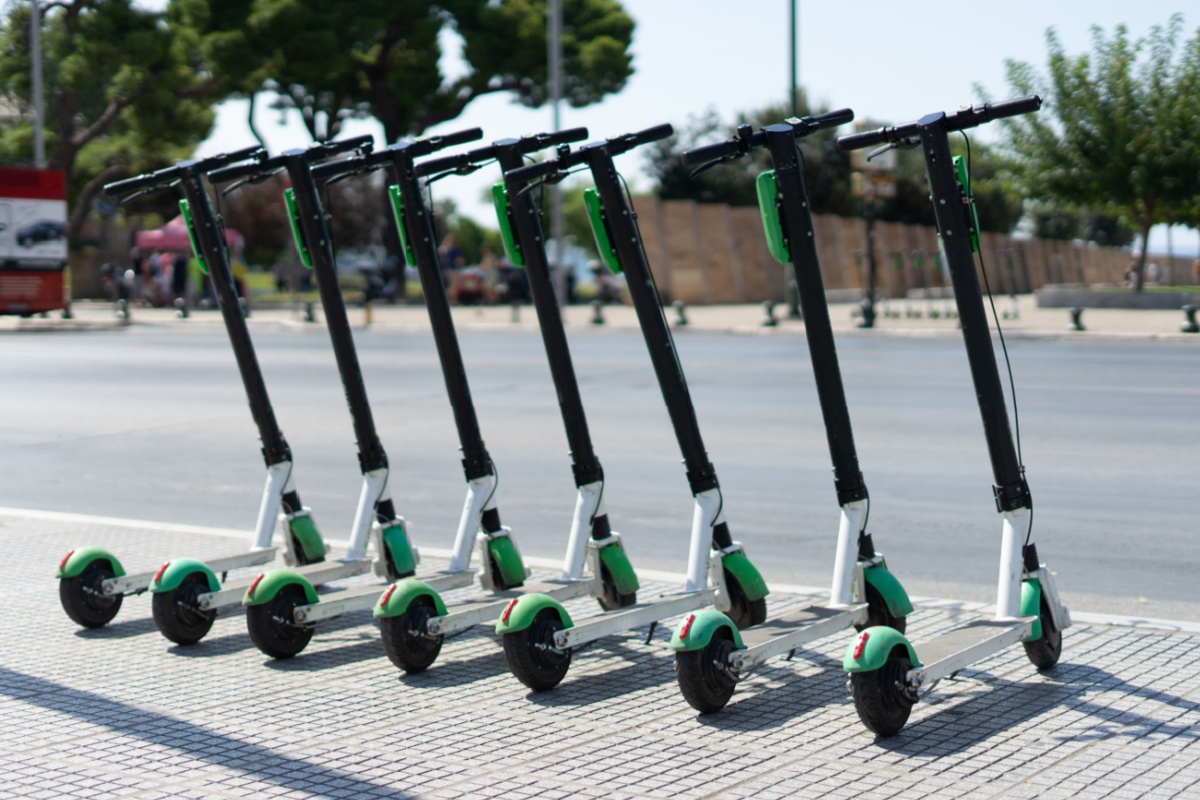
Are Lime scooters a vehicle?
If you’ve visited a capital city anywhere around the world recently, there’s a good chance you’ve seen people zipping around on Lime scooters.
Could they fall under the classification of a vehicle?
Queensland police were forced to ask this question earlier this year after spotting a man on a Lime scooter who ran a red light.
The man was breath tested and allegedly returned a blood alcohol concentration of 0.174 per cent – three times the legal limit.
The man was charged with drink driving, failing to stop at a red light and riding without a helmet.
Are hoverboards vehicles?
The police haven’t had to address whether traffic offences can be accrued to drivers on hoverboards, as hoverboards are banned from public spaces in NSW.
If you’re court riding a hoverboard in a public area you could face a fine of $319. The fine almost doubles if you’re court riding a hoverboard on a road, in which case it increases to $617.
Charged with a traffic offence?
Hamilton Janke Lawyers has extensive experience representing clients in traffic matters. If you or a loved one needs advice or representation for a traffic matter, contact Hamilton Janke Lawyers today.